
Volley Mode Rules & Illustrated Guide
1. Goal of Volley Mode
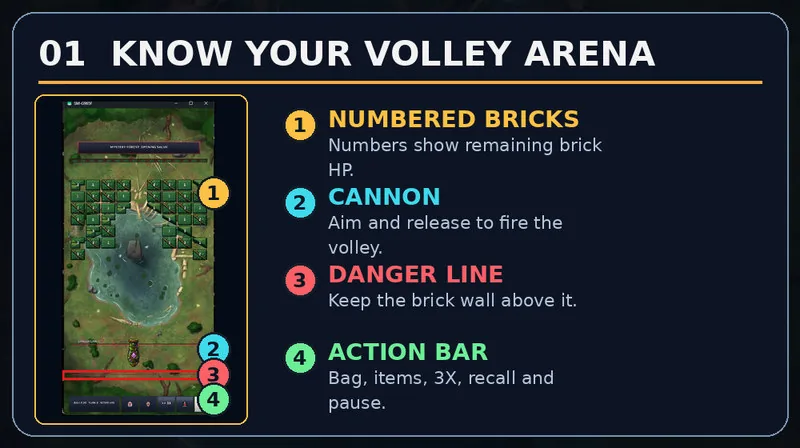
- Launch a complete volley of balls from the cannon at the bottom of the arena.
- Every numbered brick shows its remaining HP. Each normal hit removes one HP unless an active effect changes the damage.
- Destroy every brick that counts as a stage objective to win. Permanent obstacles do not normally need to be destroyed.
- You lose if a live objective brick or indestructible obstacle crosses the danger line after a turn, unless a Rescue Ward saves the run.
- Aim from the cannon at the bottom of the arena; there is no moving paddle.
2. Aim and Launch
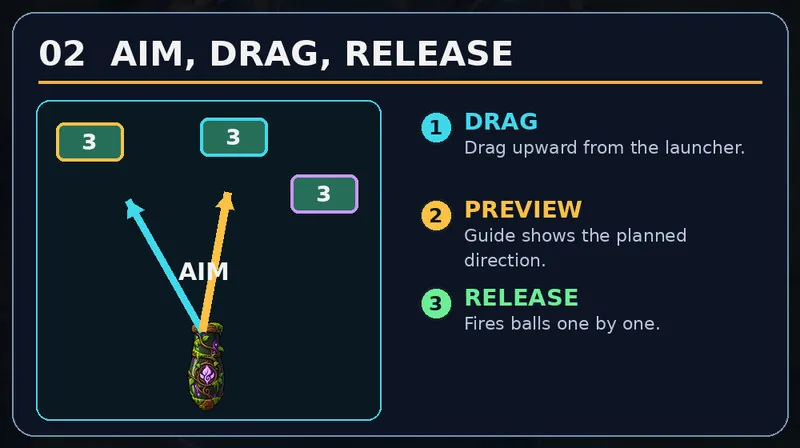
- Drag upward inside the arena to set the firing direction, then release to launch.
- Balls leave the cannon one after another along the selected path.
- Balls bounce from walls, the ceiling, bricks and solid angled rails. Bank shots help reach protected targets.
- Drag back into the cancel area if you want to cancel the shot.
- You cannot start a second shot until the current volley has finished or has been recalled.
3. Bricks, HP and Ricochets
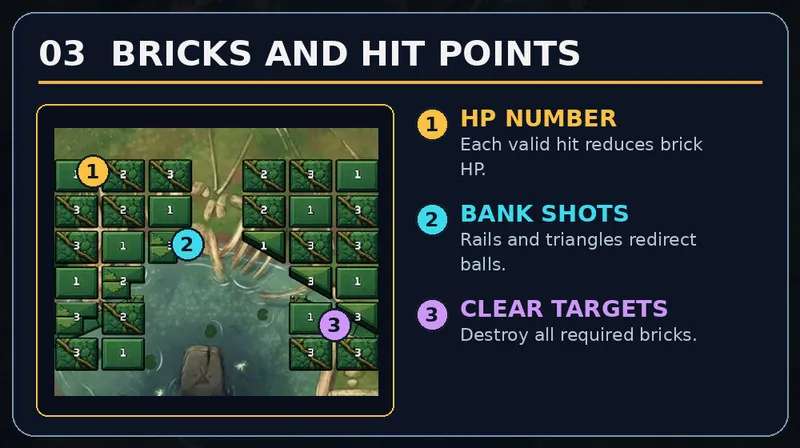
- The number on a brick is its remaining HP.
- Triangular bricks have real angled collision surfaces and deflect balls differently from rectangular bricks.
- Rails redirect balls. Some remain fixed while others descend with the formation.
- Repeated ricochets through a crowded path are usually stronger than a straight shot.
- Steel or indestructible bricks reflect balls and are normally obstacles, but they can still trigger a loss if they cross the danger line.
4. First Return and the Next Launch
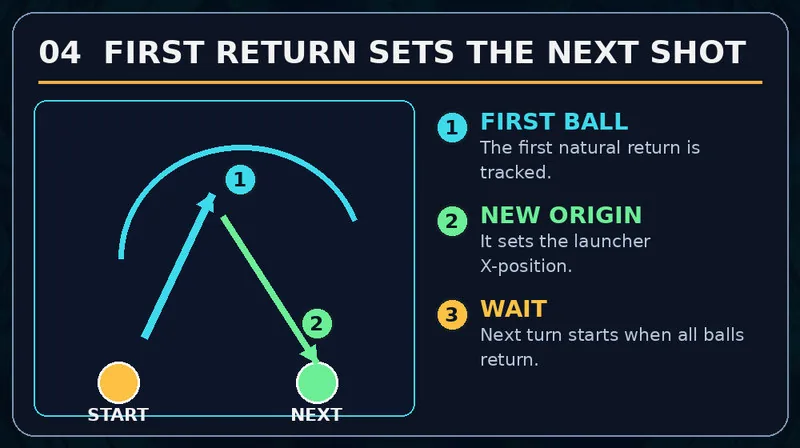
- The first ball that returns naturally to the floor records its horizontal position.
- After all balls return, that point normally becomes the next launch position.
- Sticky Return preserves the old launch point. Magnetic Return pulls the recorded point toward the center.
- Recall is not a natural return, so it should not be used to choose an exact new launch position.
5. Turns, Descent and the Danger Line
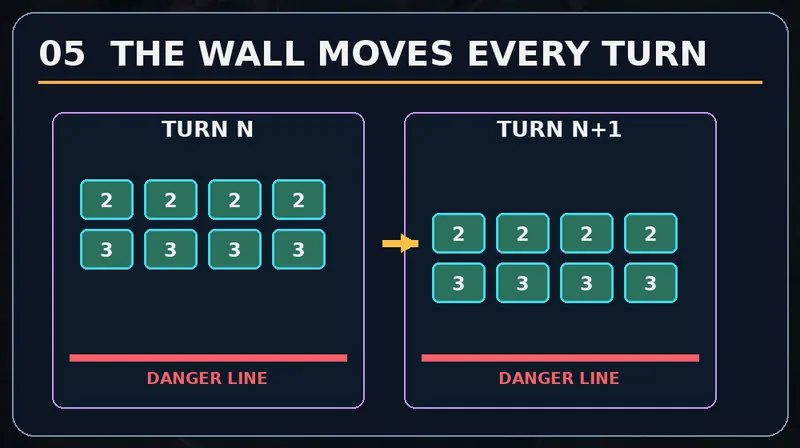
- Every completed or recalled volley consumes one turn.
- After the volley resolves, surviving bricks, rails and live bonus nodes descend by one row.
- Regenerating bricks may recover HP, and moving bricks may change location between turns.
- New balls collected during a shot join future volleys after the current turn resolves.
- If a live target or indestructible blocker breaches the lower line, the stage fails unless a Rescue Ward pushes the formation back.
6. Controls
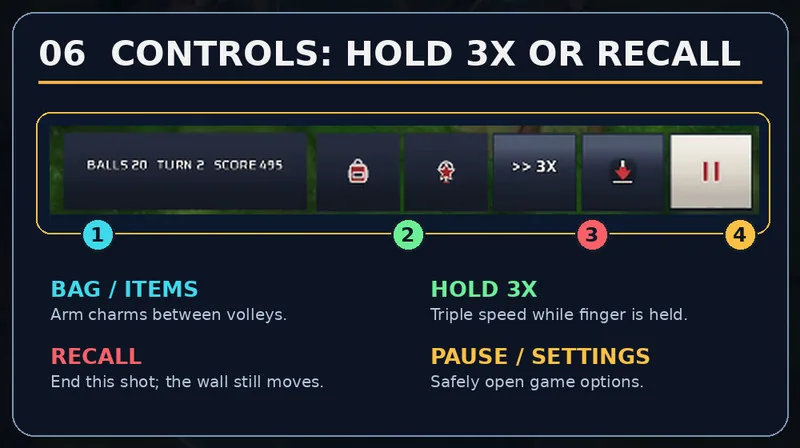
- Bag: view owned charms and prepare a compatible effect when permitted.
- Items: opens compatible items from your game inventory for use between volleys.
- 3X Speed: press and hold while balls are in flight; release to return to normal speed.
- Recall: ends the current volley early. It still consumes the turn and the wall still descends.
- Pause / Settings: pause the attempt, adjust options or resume the run.
7. Bonus Nodes and Pickups
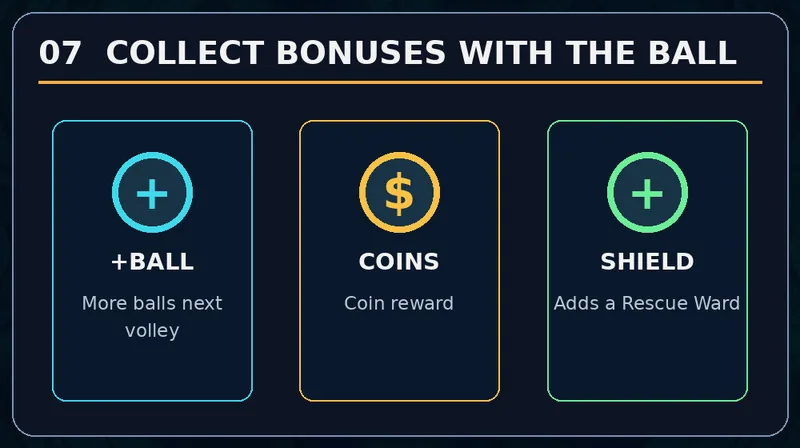
- +BALL: permanently adds the displayed number of balls to later volleys in the current attempt.
- Carrier bricks: may release extra balls or a positive item when destroyed.
- Coins: collectible nodes can award coins.
- Shield: grants a Rescue Ward up to the allowed limit. A ward can prevent one danger-line breach.
- Other nodes can award score, random items, star energy or speed effects.
8. Special Bricks
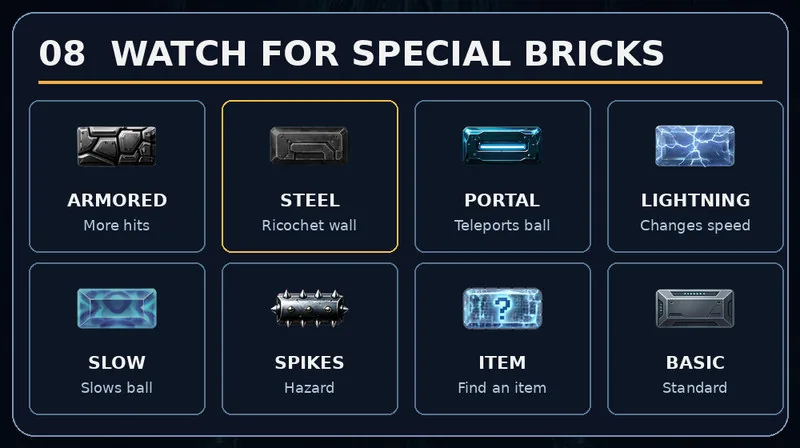
- Armored: requires sustained hits; stronger variants have greater durability.
- Regenerating: restores HP between turns up to its original value.
- Explosive: damages nearby bricks when destroyed.
- Speed / Slow pass-through: allows passage while changing ball speed.
- Black-hole portal: teleports a ball between linked portal locations.
- Key and Lock: collect the key to unlock its linked targets.
- Switch and Ghost Gate: a switch changes the collision state of linked gates.
- Chain and Moving bricks: linked blocks can react together, while moving blocks reposition between turns.
9. Boss Battles
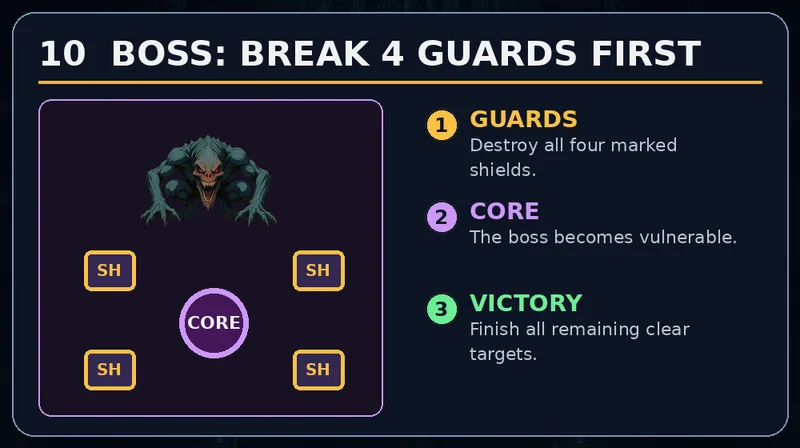
- The final playable stage of every world is a boss encounter.
- Four shield guards protect the central Boss Core.
- Destroy all four guards first, then attack the exposed core and clear the remaining required targets.
- Boss arenas add bank-shot rails and a world-specific mechanic.
10. Worlds and Progression
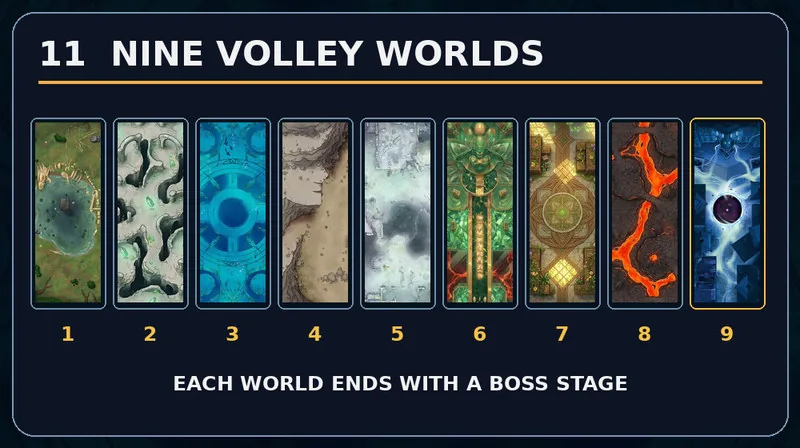
- Mystery Forest: 10 stages.
- Venom Wilds: 10 stages.
- Aqua Vortex: 10 stages.
- Desert Spirits: 10 stages.
- Ice Grave: 10 stages.
- Tormented Souls: 10 stages.
- Moon Light: 10 stages.
- Infernal Gates: 10 stages.
- Final Eclipse: 10 stages.
- The current asset-driven campaign contains 90 Volley stages across 9 worlds, with 10 stages in each world.
11. Win, Loss and Useful Tips
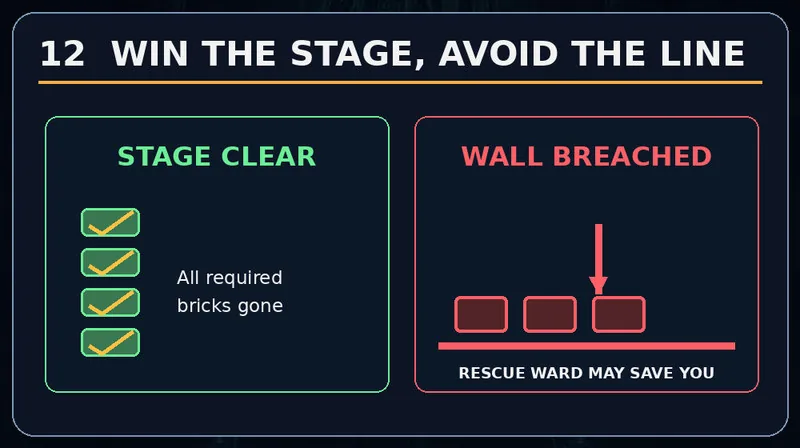
- Stage Clear: destroy all required objective bricks, even if unbreakable obstacles remain.
- Wall Breached: a required or indestructible brick reaches the danger line without an available Rescue Ward.
- If a rewarded continue is available and the reward completes, the wall is pushed back four rows.
- Collect +BALL nodes early, watch the lowest live brick, and use side-wall angles to create long ricochets.
- Remember: Recall costs a turn and does not stop the wall from descending.